
Tippecanoe County Recent Arrests
The Sheriff's Corrections page is the place to begin. It links the Tippecanoe County Current Inmate Listing. JailTracker shows who is in county-jail custody or held on a current hold. Keep its limits in mind. The roster is not a full history of everyone arrested today. A person can be cited and released, transferred, or still moving through intake. That person may never hit the live list. Tippecanoe County offers no separate 24-hour feed and no multi-day booking blotter. The roster stays the closest live view. The two time-window pages show how to use it without pretending a feed exists.
| Window | Official reality | Best next source |
|---|---|---|
| Same day | No separate 24-hour page was found | Arrested Today uses the current roster and records fallback |
| Several days | No Sheriff multi-day blotter was found | Arrest Reports explains logs, news, and older requests |
| Current custody | Official JailTracker listing | Search the live roster after intake |
| After release | The person can drop from the current list | Request the booking record and check MyCase |
Arrest time and booked time are not the same thing. The Sheriff's records form asks separately for arrest, lodging, and discharge times, and no county source states an average gap between them. The official Corrections source shows the county path to the roster and jail contact.
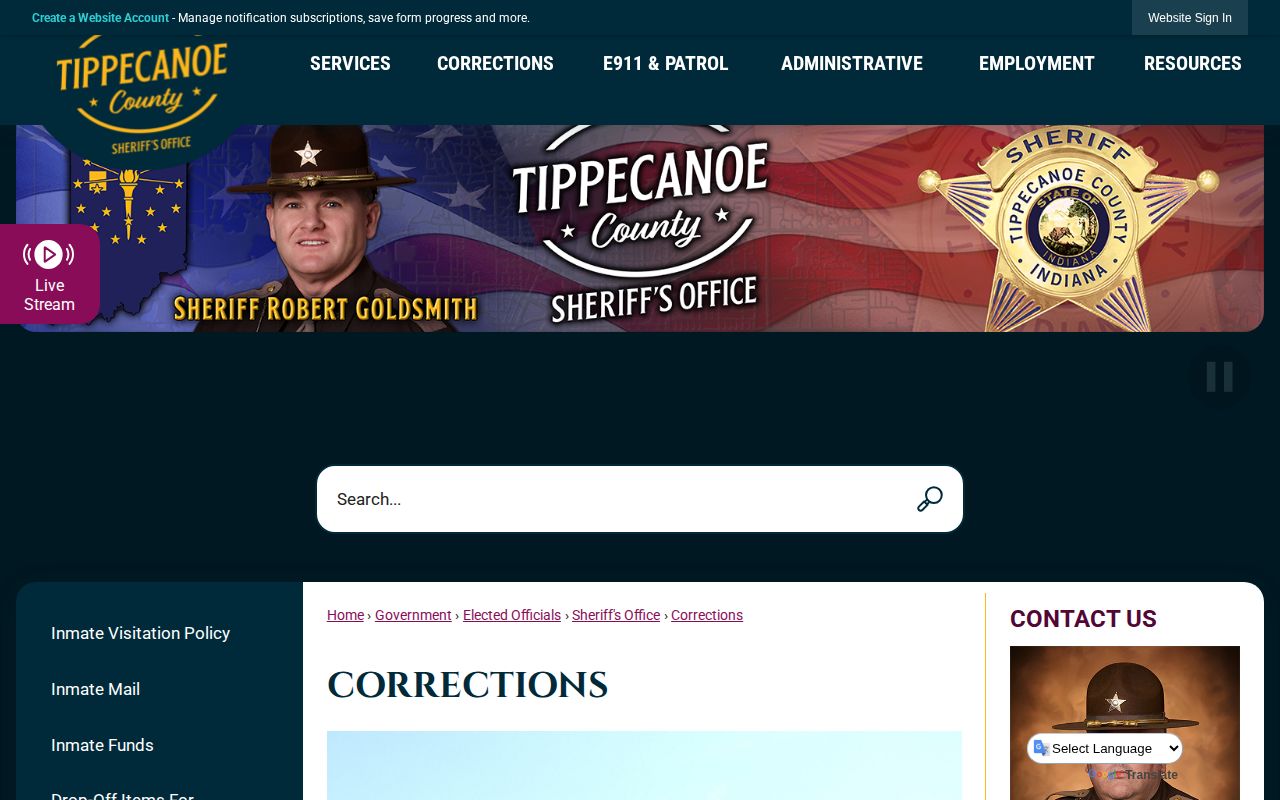
This capture identifies the official custody route without reproducing a list of people.
Tippecanoe County Jail Roster
Open the official JailTracker current inmate listing and let the application load. Search the narrowest name you know. A name alone can pull the wrong person, so compare the identifiers and the agency behind the hold.
| Roster field | What to verify |
|---|---|
| Full name | Spelling, suffix, alias, and duplicate names |
| Booking or inmate number | The jail identifier, not a DOC or court number |
| Booked date and time | Intake time, which may follow arrest |
| Charge or hold | Intake charge or legal basis, not disposition |
| Bond and status | A value that may change after court review |
| Held-for agency | The agency tied to custody, not always arrest location |
| Photo | Only if the live detail exposes one |
The search takes four steps. Enter the person's name first. Then compare each match carefully. Open the detail view and note the booking number, time, agency, and custody status, and confirm anything time-sensitive with the Jail Division at 765-423-1655. A blank or stalled application shell does not mean the person is absent from the jail.
The county publishes no refresh interval, posting time, archive depth, or photo rule. Treat any third-party update clock as its own schedule, not the Sheriff's.
Sheriff App and Social
The Sheriff links an Apple app called Tippecanoe Sheriff's Office. Its official description centers on public-safety news, tips, and crime reporting. No second arrest roster lives there. No complete booking alert, no mugshot feed. The Sheriff's Facebook account and Sheriff Alerts link work the same way. Both act as selective communication tools. The app helps someone follow agency news, but it cannot fill a missing booking row. Use the VINE Arrest Check for one purpose. It covers a person-specific release or transfer notice. Local victim-assistance material assigns VINELink to jail release and SAVIN to prison release. The official app listing describes its actual public-safety purpose.
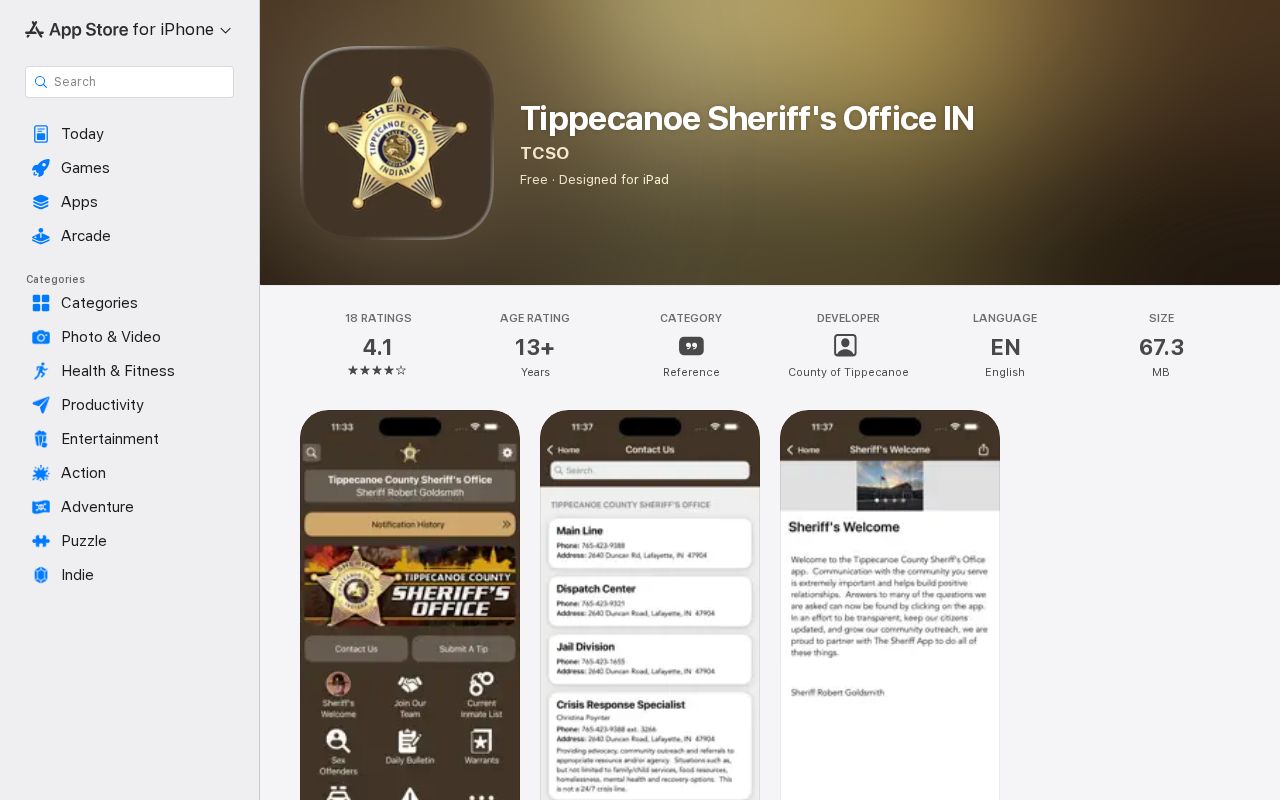
Useful agency context, yes. But the app is not presented as an arrest-photo gallery.
Official and Secondary Sources
Source order protects accuracy. Government systems establish custody, records, and court status, local news adds context to selected cases, and unofficial publishers may keep copied entries after the county page changes.
| Channel | Custody slice | Status | Photo |
|---|---|---|---|
| JailTracker | Current county jail custody | Official | Check live detail; not guaranteed |
| Sheriff records | Identifiable booking and arrest data | Official request | May be requested, subject to law |
| MyCase | Public case and disposition | Official court | No booking-photo role |
| IDOC locator | State prison custody | Official state | Do not assume a county mugshot |
| WLFI Crime | Selected local incidents | News, incomplete | Story-dependent |
| County booking sites | Copied recent or historic entries | Unofficial and possibly stale | May reprint images |
Busted Newspaper, Recently Booked, Mugshots.com, Arrests.org, and Mugshots.zone all carry Tippecanoe County sections. Treat them as discovery sources only. None is the Sheriff's live roster, none establishes current custody, and WLFI's crime section is selective rather than a census of bookings.
Recent Arrests by City
Every Tippecanoe County arrest starts with a local police report, then becomes a jail booking once the person is lodged in Lafayette.
City departments and the county jail each keep their own records.
- Lafayette Recent Arrests covers LPD records, NextRequest, and county booking.
- West Lafayette Recent Arrests covers WLPD records and custody after county lodging.
- Battle Ground Recent Arrests covers the town marshal path and the county-roster fallback.
Unusual state, federal, university, or outside-agency holds can change who keeps the record. Read the arresting and held-for agency rather than assuming city police own everything.
Tippecanoe Booking Record Fields
A booking record is created during jail intake. It is distinct from an incident report and a court docket. The Sheriff's public-record form names the arrest, charge, lodging, discharge, and bond facts you can request.
| Field | Meaning |
|---|---|
| Name and identifier | The person and jail record, subject to spelling and alias issues |
| Arrest time | When the agency reports custody began |
| Booked or lodged time | When jail intake was recorded |
| Charge or hold | The charge or basis known then |
| Bond or bail | Release terms if maintained and available |
| Discharge time | When county custody ended, if recorded |
| Booking photo | An intake image if maintained and disclosable |
| Court date or cause | A bridge to MyCase when available |
The record will not show where an offense happened. It also omits whether a prosecutor kept the same charge, or how the case ended. Tippecanoe's bond schedule contains exceptions too. Check current local rules instead of relying on an old amount. That matters most for serious charges, domestic-violence provisions, or anything requiring a judge.
- Booking
- Jail intake after arrest.
- Bond
- A release condition that a court can change.
- Arraignment
- An early court proceeding concerning the charge and rights.
- Disposition
- The court’s recorded outcome.
- Expungement
- A court process that can restrict qualifying records.
County Mugshots and Photo Policy
The Tippecanoe County Sheriff's roster does not guarantee a booking photo for every arrest listed. Check the live booking detail first. When no image appears, contact the Sheriff's office and request the photograph tied to a specific arrest record. Indiana law neither broadly requires nor bans online booking photos. APRA exceptions and confidentiality rules still govern what gets released.
A booking photo simply documents how someone looked at intake. The county posts no photo gallery, and third-party sites are not an official record. For people held in state custody, use the IDOC offender locator; it does not replace a county booking image. Federal BOP listings likewise offer no public mugshot source.
Unofficial sites often copy arrest photos and leave them up long after release. That does not mean the Sheriff still publishes the image. Rely on the county record and the courts for what matters.
Request a County Arrest Record
The Sheriff's records form is the place to start. Fill out the Request for Public Records form, which cites Indiana Code 5-14-3-5 and lists the office's contact details. No fee or turnaround time is printed on it, so ask about copy or redaction costs and expect a wait rather than same-day service.
- Identify the person, approximate arrest date, and arresting agency.
- Add the booking number when the roster shows one.
- Request the booking record, charge or hold, lodged and discharged times, bond, and associated booking photo if maintained and disclosable.
- Give contact information and submit to the Tippecanoe County Sheriff’s Office.
- Ask for the legal basis if any part is denied or redacted.
Head to 2640 Duncan Road, Lafayette, IN 47904. That address is the Sheriff's office in Tippecanoe County. Call 765-423-9388 for the main line; the form also lists fax 765-423-4155 and the Jail Division at 765-423-1655. A Records Clerk sits at extension 3216. City incident records follow a different custodian. Lafayette and West Lafayette each set their own fees, so label the agency and record type before sending anything.
Indiana Public Records Law
Indiana's Access to Public Records Act starts at Chapter 5-14-3. Inspection and copying rules sit in IC 5-14-3-3. Confidential records and discretionary exceptions follow IC 5-14-3-4, while IC 5-14-3-5 governs the law-enforcement daily log and arrest information, and IC 5-14-3-9 handles response mechanics. None of that forces a live mugshot site.
Investigatory records can fall under a discretionary exception, and other statutes shield still more material. The county's Juvenile Division is blunt. Juvenile records are not public, and they do not vanish automatically at 18. A missing minor's record reflects a legal access limit, so skip unofficial pages pushing copied images.
Retention is separate from online visibility. Daily bulletins carry a one-year schedule. Adult inmate custody files are marked for destruction ten years after incarceration ends, and other police record series run on their own periods. Fingerprints and some serious-case files follow special rules. The schedule guarantees nothing about web access.
Tippecanoe's Justice Reinvestment Advisory Council posts system analytics. Those figures describe operations, not people. They are trends, not a booking list. Never stretch them into a custody roster.
Arrest Records and Expungement
Expungement starts with a court petition. The Indiana State Police guidance walks through the process. It shows how a court order reaches the state repository, with details in the expungement guidance. An order can restrict eligible official records. No rule promises that every copied image vanishes at once. The official petition and repository page shows the same legal route.
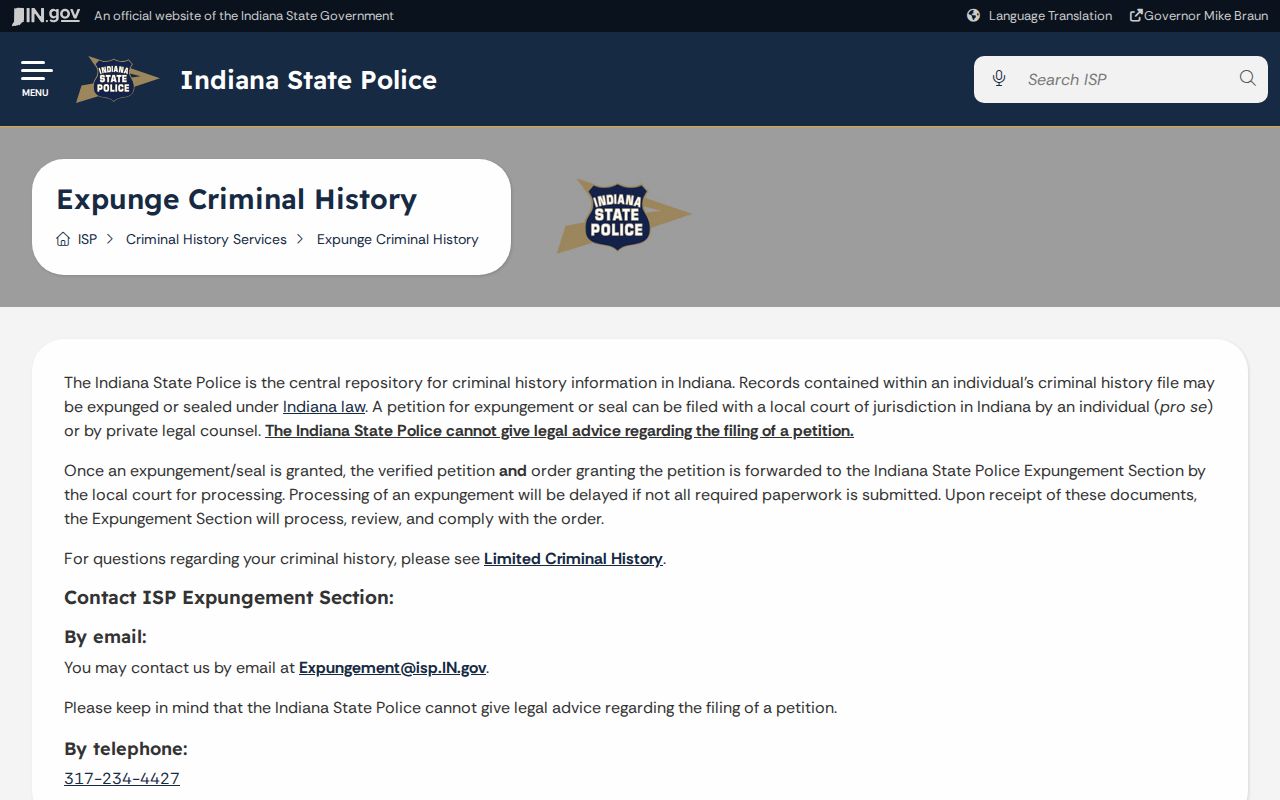
This official process is about legal restriction, not instant deletion across the web.
After an official correction, sealing, or expungement, contact each publisher through its free policy. Busted Newspaper, Recently Booked, and Mugshots.com post correction or removal routes with stated grounds. Mugshots.zone offers a county contact form. Arrests.org lists no clear county-specific free process. Do not invent one. Never pay an unknown service that promises deletion or claims special access to the Sheriff.
A publisher change does not amend the official file. The official file may lag too. Search results can stay stale after source removal, and a search engine's outdated-content process can clear the cached copy. Keep copies of court orders and submissions.
County Arrest Warrants and Wanted
The Tippecanoe County Sheriff runs no countywide warrant search or most-wanted portal. Lafayette's FAQ sends wanted-information requests in person and points to Tippecanoe County Courts. Its Fugitive Search page holds historic entries from 2018 and 2019. That history cannot confirm a live warrant.
A warrant is a court order authorizing arrest. Status can shift after service, recall, or court action, so verify with police, the court, or an attorney. Never confront a listed person. Call law enforcement for any immediate safety concern. Route tips to the agency, not an unofficial publisher. An old wanted notice proves nothing today.
Tippecanoe Court Case Outcomes
Tippecanoe cases run in stages: roster, then a jail record or request, then the court docket. The court page points to Indiana MyCase. Search by last name plus first initial. MyCase shows non-confidential filings, hearings, and disposition, and the official Tippecanoe court-record instructions explain the county route and its limits.

The court record supplies what a booking entry cannot. Arrest, booking, and disposition are separate moments. The jail books and holds. Later the court may record dismissal, plea, conviction, diversion, or another outcome. A released person can still have a pending case, and charge wording can change. Question: Does release mean the case ended? No, it means the custody event ended, so check MyCase or the Clerk for the public outcome.
State and Federal Custody
The Indiana Department of Correction runs an offender locator. It covers state custody only. This is not a fresh Tippecanoe County booking feed. Search by identifying details and a DOC number when known. Formal offender records need separate authorization through IDOC's records office. The IDOC Offender Locator shows the entry point.
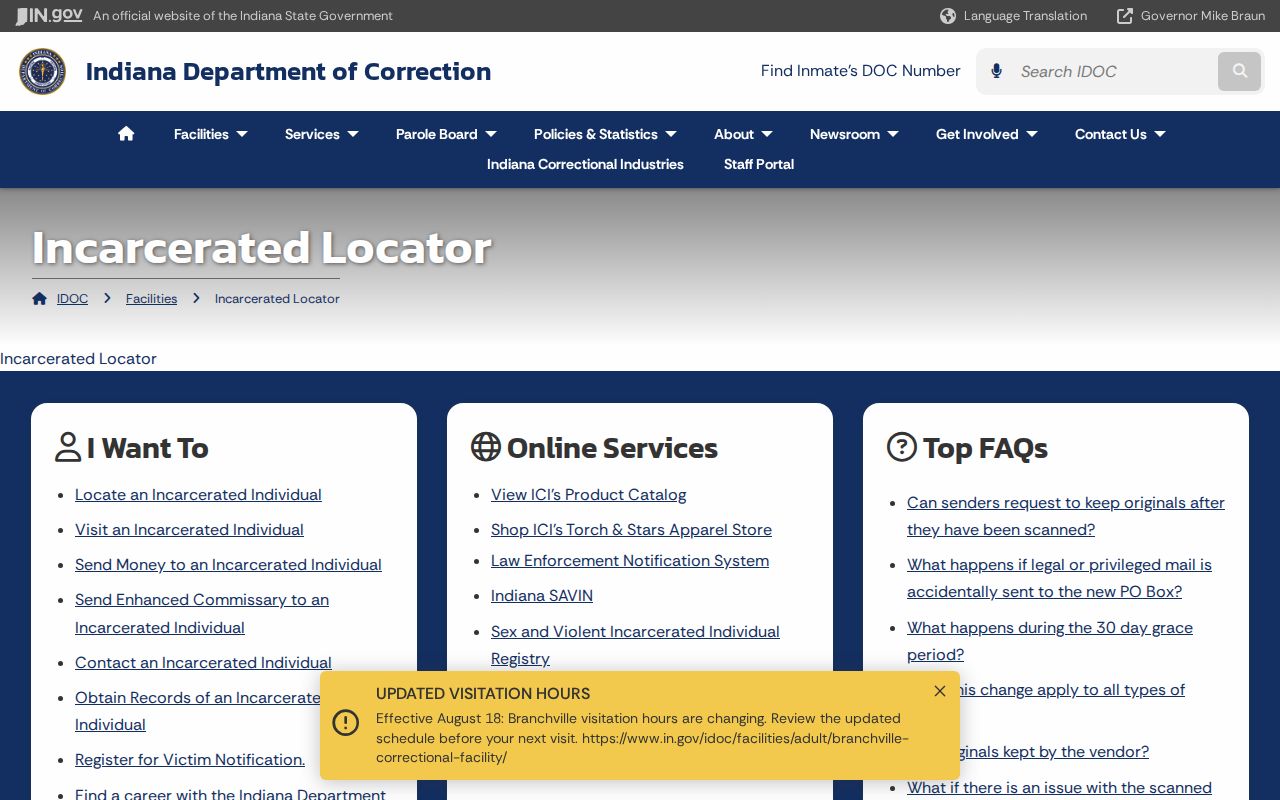
State and federal custody sit apart from the Tippecanoe County jail roster. The Indiana tool tracks state offenders only. Federal cases run through the Bureau of Prisons locator. It lists people in BOP custody but offers no public mugshot field. ICE handles immigration detention through its Online Detainee Locator instead. Each system answers one narrow custody question. A federal or immigration hit tells you where someone is held. It does not give the original county arrest record or the final court outcome.
Question: Where did an older record go? Start with the Sheriff for a county booking. Try the Clerk for a court filing. Use IDOC for a state offender file. IARA fits only when its retention and transfer rules match the record.
Verify Tippecanoe County Arrests
Verification comes down to custody status and timing. Someone just arrested may still sit with the arresting agency. After booking, the name can appear in JailTracker. Once released from Tippecanoe County Jail, a person drops off the current list even though the booking file and court case live on. A sentenced person may transfer to IDOC later. A federal hold can pull someone into an entirely separate system. Those shifts explain most conflicts between search results.
When two sources disagree, note when each was checked and which agency produced it. Call the jail for present county custody. Ask the Sheriff for the booking record covering intake and discharge. Use MyCase for the legal outcome. Never let an unofficial photo page overrule a newer government record, since a copied page can keep the first charge long after a prosecutor amends it.
The Sheriff's form helps most because it treats time of arrest, time lodged, time discharged, and bond as separate facts. Requesting each field keeps the local booking timeline clear. No absence, photo, charge label, or bond figure means much alone.